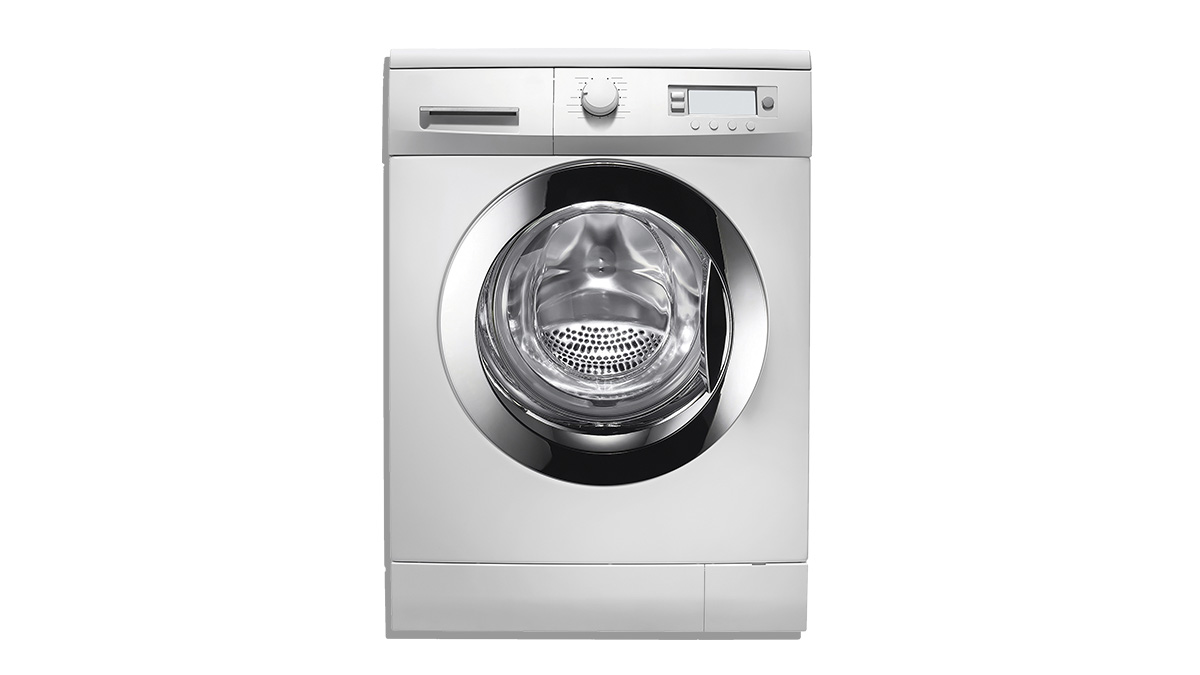
Wouldn’t it be great if you could throw your dirty laundry in the wash before work and come home to clean, dry clothes hanging neatly in your wardrobe? That dream could be one step closer with a washer-dryer combo.
At their simplest, washer-dryer combos combine a front loading washing machine and a condenser clothes dryer into a single appliance that’s the same size as an equivalent standalone washer.
They typically offer all the features, programs and modes of mid- to high-end washers and dryers, so they promise to do everything standalone washers and dryers can do, but with half the footprint. And the smaller your laundry or living space, the bigger an advantage that becomes.
It’s important to note you can use the washing and drying functions together, or independently of each other.
Washer-dryer combo pros and cons
Pros
Washing performance is comparable to an equivalent standalone appliance.
Half the footprint of two separate appliances.
You can wash and dry your clothes without manual intervention – no more unloading wet clothes to put them in the dryer.
You can wash or dry independently, so you can use it as a normal washer with the peace of mind of a dryer for emergencies.
Purchase and running costs are roughly equivalent to buying and running a separate front loading washer plus a condenser dryer.
Cons
You can typically only dry half the capacity you can wash. This means if you’re washing full loads, you’ll need to take half the clothes out at the end of the wash cycle and dry in two goes.
You need to wait for the machine to finish washing and drying before you can add another load. So if you’re doing multiple loads of laundry, it will take longer than if you were using a standalone washer and dryer simultaneously.
Very long drying times – over six hours in some cases.
Most models use a staggering amount of water to dry (water is used in the internal heat exchanger to cool and condense hot humid moisture, which is then collected and disposed of via the drain) as most washer/dryers use condenser technology for drying.
A couple of models with a heat pump dryer are now available, which are more energy-efficient and don’t use water to dry, but they are rare and more expensive.
Complicated machinery parts for two devices (a washer and a dryer) means there’s more likelihood something will go wrong.
Washer-dryer combos are a great solution for small houses and small households: they have a smaller footprint than standalone appliances, and the dryer capacity is best suited to one- to two-person households.
And because you can wash and dry without moving clothes between appliances, combos are also a good idea if you have mobility issues that might make doing so difficult. See our guide to washing machine accessibility for more.
If you use a dryer very occasionally, a washer/dryer could still be an option if you can get it for the right price.
But if you use your dryer regularly and you’ve got a big family (or just big laundry requirements) then you’re probably better off with standalone appliances – you’ll get much better drying performance, and one load can be in the dryer while the next one’s washing.
If you’re on tank water or worried about the environment, then the high water consumption (when drying) for combos that use a condenser dryer means you should probably give those particular models a wide berth.
And if you’re on a budget and you only use your dryer infrequently, buying a standalone washing machine and clothes dryer can save a few dollars – you can opt for a cheaper vented dryer, with a higher running cost, (or skip the dryer altogether in favour of a clothes horse).
Washer-dryer combos are a convenient way to tackle laundry day, as they can wash and dry without your intervention – so yes, you can put dirty clothes in before work, comfortable in the knowledge that you’re coming home to clean, dry laundry and don’t have to move it between appliances or hang it on the line.
In our experience washer-dryer combos wash much the same as a conventional washing machine, but don’t do as good a job in the drying department.
They can also typically only dry half the capacity that they can wash (although most of us don’t load the machine to the capacity for washing anyway).
They can also typically only dry half the capacity that they can wash
So if you have the option, the good old Hills Hoist will be the best, cheapest and probably fastest way to dry your laundry, but you can relax knowing you have a wet weather backup plan in case of emergencies.
If you don’t have the option of line drying, and don’t have the space for standalone appliances, then a washer-dryer combo is probably the right choice for you.
But to get the most out of your washer dryer, make sure you select the highest spin speed available to extract as much water as possible before the drying phase. Even then it can still take a long time to dry.
How do washer-dryer combos work?
Washing
We’ve found most washer-dryer combos wash exactly the same way as a conventional front-loading washing machine. Water and detergent are added, clothes are picked up and dropped into the wash water to clean them, then they’re spun, rinsed, and spun again.
So you’ll have a comparable wash experience to using a conventional washing machine.
But washer-dryer combos are much more complicated appliances because of the drying aspect. Unlike standalone dryers, there’s a whole bunch of plumbing and water inlets in them for the washing side of things that are also co-opted for the drying component.
Drying
Unlike a simpler vented dryer, which pumps hot wet air straight out, condenser dryers (the most common option for a washer/dryer) capture the moisture from your clothes.
They push warm, dry air through your wet washing to extract moisture, then cool the now humid air in a heat exchanger to condense the moisture into water, which is then collected in a tank or pumped down the drain. The (now dry) air is reheated and the cycle repeats.
The heart of any condenser dryer is the heat exchanger. It works like the radiator in your car by passing the hot air through metal fins with a large surface area to facilitate cooling.
In a standalone dryer these fins are air cooled, but washer-dryer combos use water instead.
After a few cycles through the heat exchanger, the cooling water becomes too warm to use, so it’s discarded down the drain and fresh, cool water is drawn in from the tap. Rinse and repeat, as it were, until your clothes are dry.
How do washer-dryer combos compare to standalone appliances?
Washer-dryer combos use the same washing action as an equivalent front loader, so their cleaning capability is comparable. Although they use about the same amount of energy as an equivalent condenser dryer to dry, they take about twice as long to do it – 3.5 hours on average, although one model we tested took over six hours. Line drying would probably be faster.
This isn’t an issue if you’re getting the laundry done while you’re at work or overnight, but it could be frustrating if you’re in a hurry for clean clothes.
The biggest issue with the use of a condenser dryer is that it is an outdated technology with no new standalone models available due to the better performance and efficiency of heat pump dryer technology.
Condenser dryers in a washer-dryer combo uses a lot of water – sometimes more than they’ll use for washing.
If you use your dryer regularly, you’ll probably be better off with a standalone appliance, or you could search for one of the latest washer-dryer models using heat pump technology.
It’s also worth considering that standalone appliances can be replaced individually, but when your washer-dryer combo dies, you’re left without a washing machine or a dryer and need to replace the whole thing.
It varies from model to model, but the appliances in our test averaged 37L of water to dry our 3.5kg test load. That’s a ridiculous amount of water to dry a load of washing. In comparison, vented and heat pump dryers use no water.
That’s bad news in a dry country like Australia, but due to a loophole in the way water efficiency ratings are calculated, the water used in the drying process is not reflected in the machine’s water efficiency star rating – only the water used for washing is included in the calculation. (This is a hangover from standalone dryer ratings, which don’t use water).
Due to a loophole in the way water efficiency ratings are calculated, the water used in the drying process is not reflected in the machine’s water efficiency star rating
CHOICE tip: The water star rating doesn’t include the water used for drying, but the amount of water used for drying does have to be listed as a number on the sticker. Read the label carefully – don’t just count the stars.
We are seeing more washer-dryer combos that use heat pump technology to dry (like an air conditioner). Compared to a water-cooled condenser, they’re very energy-efficient and don’t use any water to dry.
How energy-efficient are washer-dryer combos?
If, like most Australians, you wash in cold water, your washer-dryer combo (with a condenser dryer) will use roughly 10 times as much energy to dry your clothes as it will to wash them.
The energy consumption of a washer dryer is comparable to using a standalone washing machine and condenser dryer. However, if you use a dryer regularly, you’re better off using a heat pump dryer as it uses much less energy.
Another quirk of combos is that their washing and drying capacities are different because your clothes can be packed in tightly for washing, but to dry effectively they need plenty of space for air to circulate.
Most of us only fill our washing machines to half their capacity (which is why we test using 3.5kg of laundry, not a full load) so that’s not necessarily an issue. But if you wash full loads (and you would be surprised at how hard this actually is to do), you’ll need to dry in two batches.
This is inconvenient enough, but factor in how long some of these appliances take to dry – up to 6.5 hours in one case – and this could become unworkable.
Do washer-dryer combos have a lint filter/trap?
No. As washer-dryer combos are front loaders, which are gentler on clothes than top loading washing machines, they do not need a lint filter.
Denis Gallagher is a Senior project officer for Digital home products and also works on test projects for the laundry and fridge labs. He produces tests for gadgets, phones, cameras and home entertainment gear as well as TVs, washing machines, dishwashers and fridges.
Previously at CHOICE, Denis worked as a Content producer for digital products. Prior to CHOICE, Denis worked as an Assistant editor on Golf Australia magazine and Editor for Multimedia and Videocamera magazine.
Denis has a Bachelor of Arts from the University of New South Wales and a Diploma of Journalism from Macleay College. LinkedIn
Denis Gallagher is a Senior project officer for Digital home products and also works on test projects for the laundry and fridge labs. He produces tests for gadgets, phones, cameras and home entertainment gear as well as TVs, washing machines, dishwashers and fridges.
Previously at CHOICE, Denis worked as a Content producer for digital products. Prior to CHOICE, Denis worked as an Assistant editor on Golf Australia magazine and Editor for Multimedia and Videocamera magazine.
Denis has a Bachelor of Arts from the University of New South Wales and a Diploma of Journalism from Macleay College. LinkedIn
For more than 60 years, CHOICE has been fighting the good fight for Australian consumers.
In the past year alone we've uncovered systemic issues with sunscreens, investigated shonky supermarket pricing, fought for stronger scam protections and helped make complex energy pricing fairer and clearer.
CHOICE is here to provide unbiased advice and independent testing in our world-class labs. We buy the products we test, just like you do, and our expert reviews are influence free. We’re here to help you choose smarter. Hopefully you’ll also save some money along the way.
Thanks to CHOICE, you’ll never be alone when a business treats you unfairly. You can support our work by joining or donating to our cause.