Air purifiers under $350 – are they any good?
CHOICE experts reveal whether you can get a cheaper air purifier that actually works.
Last updated: 8 May 2026
If you’re concerned about the pollutants or germs that may be hovering around your personal breathing space, or you suffer from asthma or allergies, you may have considered joining the many people who have invested in air purifiers over the past few years.
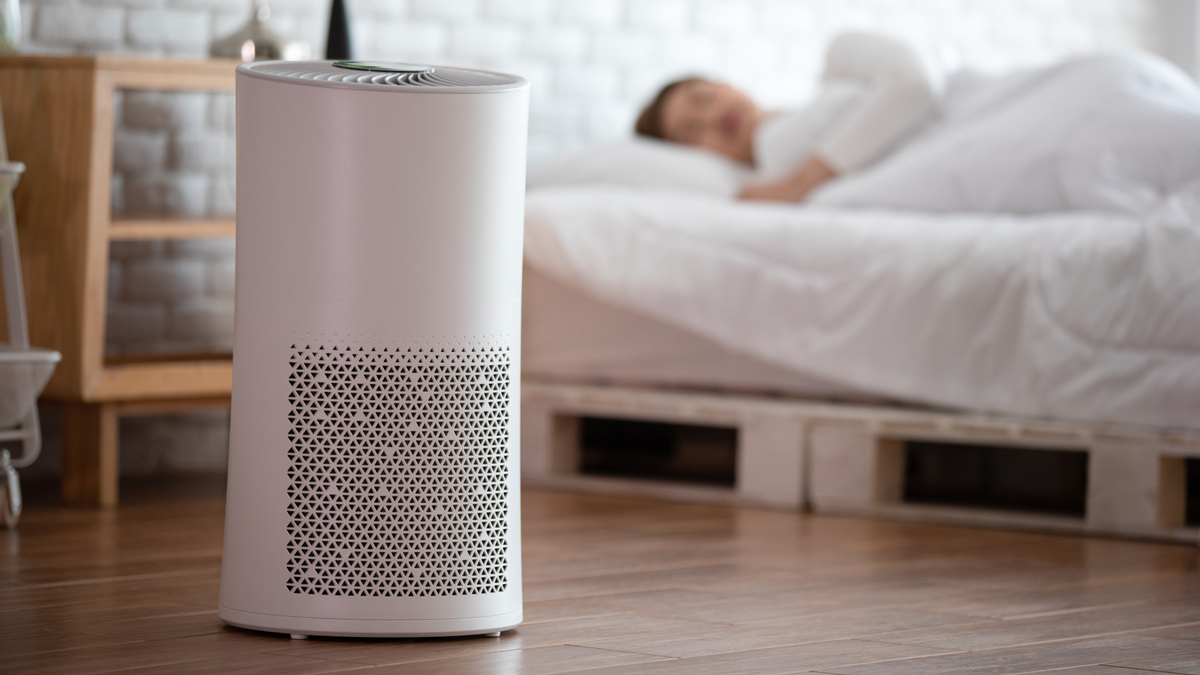
“Essentially a fan with a filter inside, air purifiers suck in air and pass it through a filter, trapping floating particles. This can improve air quality and filter out irritants that you’d otherwise be breathing in,” says CHOICE expert Chris Barnes.
If you’ve started researching models, you’ve likely noticed there is a huge variety of sizes and types available across a broad range of prices. You could spend anywhere from $150 for somewhere from Ikea, Kogan or Aldi or splash out several hundreds of dollars – up to $1000 or more – on a premium model from brands such as Dyson, Samsung, Philips or InovaAir.
But what are you really getting for your money, and how do the cheaper models compare to the more expensive ones?
CHOICE experts dish the dirt on air purifiers
Our air purifier review looks at 50 different models. We give each air purifier a CHOICE Expert Rating based on how each model performs on aspects such as dust removal, smoke removal and removing volatile organic compounds (VOCs) from the air.
In our review you can also find out which models are the most energy efficient, the quietest and the easiest to use.
Chris says there’s no guarantee that buying a more expensive air purifier will give you better performance than a cheaper model. He says there are air purifiers in our review that cost $800 or more that recorded disappointing results. However, our testing does generally show that the lowest scoring models do tend to be the cheaper ones.
“The cheaper models, say those under $350, tend to be smaller, which means they may struggle to deliver the same air purifying power as a larger model, which could be an issue depending on the size of the space you’re using it in,” says Chris.
Air purifier features you shouldn’t compromise on
No matter how much you want to spend, Chris recommends looking for one with a HEPA filter, and he also says you should consider buying one that’s designed for a slightly larger room than the one you plan to use it in.
“A HEPA filter traps very small particles. It’s one of the most important features, but not all air purifiers have one, so make sure you check the product specifications,” he says.
“And check the CADR (Clean Air Delivery Rate) – that’s the measure of how much air it purifies per hour. You want to ensure that it’s high enough so it circulates the full volume of air in your room, otherwise it won’t be doing the job you bought it for.
“These features may mean you need to pay a little more, but if you can afford it, they’re well worth the extra money.”
How do air purifiers under $350 rate in CHOICE testing?
The sheer range of air purifiers on the market can make it hard to pick the right one – but that’s where we come in.
We independently test and review new air purifiers each year in our onsite labs, and our experts know exactly what to look for to help you find the best product.
Only members can access our detailed air purifier testing data. If you’re not yet a member, join CHOICE to get instant access to all of our expert, independent reviews.
Or log in to unlock this article and find out which affordable air purifiers we rate as the pick of the bunch.
Pru Engel is the Audience and Engagement editor at CHOICE. Her job is to ensure as many Australians as possible know about the great work we do at CHOICE.
She works closely with our testers and experts to find the gems of information in our data and research that will resonate with Australian consumers and help them make the best decisions, whether they're purchasing an air fryer, looking for a new mattress or trying to find the cheapest car insurance. She also helps to drive meaningful change for consumers by collaborating with our Campaigns team on content covering issues such as grocery pricing, product safety and scams.
Prior to CHOICE, Pru worked as an editor at many of Australia's leading food and lifestyle titles.
Pru has a Bachelor of Arts in Communication (Journalism) from the University of Technology, Sydney.
Find Pru on LinkedIn.
Pru Engel is the Audience and Engagement editor at CHOICE. Her job is to ensure as many Australians as possible know about the great work we do at CHOICE.
She works closely with our testers and experts to find the gems of information in our data and research that will resonate with Australian consumers and help them make the best decisions, whether they're purchasing an air fryer, looking for a new mattress or trying to find the cheapest car insurance. She also helps to drive meaningful change for consumers by collaborating with our Campaigns team on content covering issues such as grocery pricing, product safety and scams.
Prior to CHOICE, Pru worked as an editor at many of Australia's leading food and lifestyle titles.
Pru has a Bachelor of Arts in Communication (Journalism) from the University of Technology, Sydney.
Find Pru on LinkedIn.